
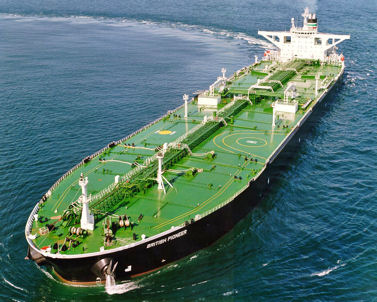
Essay written in 2020 for the course “International and Comparative Commercial Law”, held by prof. Thomas Bachner at WU – Wirtschaft Universitat Wien. Evaluated with highest honors
Introduction
This essay will analyze the “West Tankers” preliminary ruling (2009) before the European Court of Justice (ECJ) and its related proceedings before the competent English courts, in order to evaluate its consequences for the role of arbitration in the context of European Union’s “Brussels regime”. In order to do this, it will also focus on the impact of this decision in ruling out the English courts’ power to issue anti-suit injunctions to protect arbitration to be conducted within England.
The essay will thus consider: in sec. 1, the legal situation for jurisdiction and arbitration, both at EU and UK level, at the time of West Tankers; in sec. 2, West Tankers’ journey before 2009; in sec. 3, the outcome of the ECJ’s preliminary ruling and its aftermath, in particular regarding English anti-suit injunctions; in sec. 4, recent developments, especially in the light of “Brussels I” recast in 2012, and further perspectives.
At the end of this analysis, it will finally be evident that the ruling out of anti-suit injunctions from the EU system, beside having had the positive effect of enhancing “mutual trust” between Member States, on the other hand has also strongly undermined the effectiveness of arbitration within the EU. Since, however, arbitration agreements are of outmost importance in international commercial relationships, being they increasingly included in many transnational contracts, it would thus be advisable for EU Law to develop alternative measures to ensure such agreements are respected, for instance by reforming the Brussels regime again.
Section 1: The status of jurisdiction and arbitration rules at the time of West Tankers: the EU and the United Kingdom
The situation in Europe
Since the establishment of the European Internal Market with the Maastricht Treaty (1993)[1], and the spread of globalization due to the Digital revolution at the end of the last century, it was just a matter of time for transnational legal relationships to increase all over the world. In this context, EU legal instruments addressing problems arising from such relationships have certainly been valuable to build a uniform system of European Private International Law[2]. This has been the case, for instance, with the problem of assessing which Member State has jurisdiction over one and the same cross-border fact situation: recognition and enforcement of foreign judgments has in fact been governed, within the EU, by the so-called “Brussels regime” since the Brussels Convention in 1968 – whose content had already converged, by the time of West Tankers, in Regulation (EC) 44/2001, informally defined “Brussels I”.
EU Law did not deal at all, instead, with arbitration, notwithstanding its increasing importance for international commerce. Indeed, according to art. 1(2)(d) of the Regulation, arbitration did not fall within the scope of the Brussels regime. The most important international instrument governing arbitration was instead, at that time, the New York Convention on the Recognition and Enforcement of Foreign Arbitral Awards, 1958 – and the situation has not changed much either, in this respect, with Brussels I recast in 2012[3].
Furthermore, even in regard to ECJ’s case law, we had to wait until West Tankers for arbitration to be the subject-matter of a decisive ECJ’s judgement in the light of the Brussels regime. This decision, however, did not come completely out of the blue: Gasser (2003) and Turner v Grovit (2004) precedents, indeed, had already outlined – although by dealing with issues of jurisdiction, and not of arbitration – principles that the ECJ decided to recall in West Tankers as well. In Gasser, in particular, the ECJ interpreted art. 21 of the Brussels Convention in the light of civilian lis pendens rule, as requiring jurisdiction to be determined by the court first seized, regardless of any agreement conferring exclusive jurisdiction to any other court – pursuant to Convention’s art. 17. This solution was also based upon Brussels’ principle of “mutual trust”[4], according to which all Member States shall trust each other’s courts’ efficiency. Even though Gasser’s judgement was given in accordance to the Brussels Convention, while at the time of West Tankers the Brussels regime was already under later Regulation 44/2001, there was in fact a continuity between ECJ’s case law before and after 2001, with ECJ’s decisions on the Convention remaining relevant for the interpretation of the Regulation as well[5].
The situation in the UK: the anti-suit injunctions
As an expected consequence of Gasser, in Turner v Grovit the ECJ also dealt with the English courts’ traditional “supervisory power” to issue anti-suit injunctions protecting their own jurisdiction: no action frustrating lis pendens, i.e. a pending suit, should be adopted. Anti-suit injunctions had in fact for long time been used to require subjects who should have started, for a variety of reasons, proceedings before an English court[6], to dismiss their claims brought before the court of another Member State. The ECJ thus stated that such injunctions, when issued against proceedings brought before the court of a Member State in accordance with Regulation 44/2001, are in contrast with Brussels’ core principle of mutual trust[7]. It is in fact evident that this practice was based on the assumption that some courts are in a better position than others to administer justice in some specific cases, and this could clearly generate distrust towards other Member States’ juridical systems[8].
Nevertheless, such injunctions were provided by the English legal system to protect not only courts’ own jurisdiction, but also arbitration to be conducted within England and Wales, as confirmed by the UK Arbitration Act 1996, s. 44(1) and (2).
This topic will thus prove to be relevant for this essay’s discussion, since the ECJ’s decision in Turner v Grovit had not addressed the issue of arbitration yet, and it was not until West Tankers that such a matter was considered by the Court.
Section 2: West Tankers’ journey pre-2009
Factual background
In 2000, the “Front Comer” vessel caused damage to a jetty owned by the Italian company “Erg SpA”. The vessel, whose owner was the English company “West Tankers”, had previously been chartered by Erg itself, and in clause 24 of the charteparty “all differences and disputes of whatsoever nature arising out of [the] charter” were agreed to be deferred to arbitration in London or New York. Furthermore, Erg was insured, up to a certain part of the losses, with two Italian insurers, Ras and Generali, which prontly indemnified their client. Therefore, while Erg was, on one hand, starting arbitration proceedings in London against West Tankers[9] for the uninsured part of losses, on the other hand Ras and Generali immediately sued West Tankers for liability before the Tribunale di Siracusa, in Italy, seeking to recover what they had paid to Erg, by exercising their “right of subrogation” to Erg’s compensation claims – granted them by art. 1916, Italian Civil Code. The choice of court was pursuant to Regulation (EC) 44/2001, governing allocation of jurisdiction within the EU at that time. In fact, being the insurers’ claim for West Tankers’ liability of tortious nature, art. 5(3) of the Regulation had to be applied. Italy, accordingly, was the place where the harmful event – i.e., the collision causing damage to the jetty – had occurred.
However, West Tankers went before the High Court of Justice of England and Wales asking a declaration that the insurers were nonetheless bound by the arbitration agreement and, subsequently, an anti-suit injunction requiring them to dismiss proceedings in Siracusa and preventing them from starting new court proceedings.
High Court judgement, 2005
The questions the High Court addressed (in para. 14) can thus be grouped in two main issues:
- were the insurers bound by the arbitration agreement, even though they did not enjoy a direct contractual relationship with West Tankers, but only a “right of subrogation” to Erg’s claims?
- If they were bound, should the anti-suit injunction be granted, notwithstanding, on one hand, art. 5(3) of the Regulation 44/2001, and on the other hand, art. II.3 of the NY Convention?
In order to answer the first question, the High Court decided to investigate which body of rules governed the relationship between the insurers and West Tankers. According to Court of Appeal[10]’s “The Jay Bola” precedent (1997), which addressed a situation very symilar to West Tankers’, since the question whether the insurers had the duty to arbitrate did not concern the contract of insurance, – which was governed by Italian law – but instead fell within the scope of the arbitration agreement – governed by English Law, according to the ISAB/ERG PETROLI CLAUSES contained in the charterparty[11] – and since, as a result, Erg could only enforce its compensation rights by means of an arbitration governed by English Law, this was precisely the law which should apply. Erg’s compensation rights were in fact essentially the same rights the insurers were exercising by way of subrogation (para. 32). Thus, by applying English Law to the matter, the High Court concluded that the duty to arbitrate was “an inseparable component of the subject-matter of [such] rights”, and therefore insurers were bound by the arbitration agreement (para. 33). Their behaviour was thus to be considered a breach of the agreement, because subrogation to the rights of one party of the agreement cannot deprive the other party of its contractual entitlement to arbitration (para. 67). On a side note, it is interesting to observe that, while in this case the analysis of the law applicable to the dispute had been deemed very relevant in order to assess whether a duty to arbitrate existed or not, in a much more recent decision of the Court of Appeal in Enka v Chubb Russia (2020), the Court has held that it did not matter what the law applicable to the agreement was, because the court of the seat of arbitration, i.e. the English court, should exercise its supervisory jurisdiction in any case[12]. The solution reached in Enka, in my opinion, is a much more valuable solution to ensure protection of parties’ autonomy and to preserve the agreement’s efficiency. If, for instance, Italian law had to be applied to West Tankers instead on English law, and the High Court would have declined jurisdiction on the grounds of “forum non conveniens”, the matter should have been referred to the competent Italian court, whose delay in solving cases is for all to see[13]. This practice would have dangerous consequences on international commercial relations, and therefore the most valuable solution should instead be that reached in Enka.
Going back to the second question referred to the High Court in West Tankers, as already mentioned above, arbitration was not governed by EU Regulation 44/2001 due to art. 1(2)(d)’s exemption, nor by ECJ’s case law, since Turner v Grovit and Gasser only regarded jurisdiction. Furthermore, at UK-level, the Court of Appeal had already considered both these ECJ cases to decide whether their principles could be extended to arbitration by way of analogy or not, in its “Through Transport” precedent (2004), and had reached a negative conclusion. This solution was thus recalled by the High Court in West Tankers as well (para. 48). Incidentally, these are very important considerations, because the later ECJ’s preliminary ruling in 2009 would later completely modify this approach, as explained in Section 3 below.
Arbitration was, on the other hand, expressly governed by the NYC, whose art. II.3 NYC grants the “courts seized of an action in a matter in respect of which the parties have made an [arbitration] agreement” the discretion to previously examine, inter alia, the validity of the agreement, in order to decide whether to refer the parties to arbitration or not[14]. Nevertheless, Coleman J (paras. 53-58) defended the need for an anti-suit injunction in case of any breach of an arbitration agreement – like in West Tankers – by relying, inter alia, on Court of Appeal’s “Toepfer v. Societe Cargill” (1998) precedent, stating that it was “in the interests of procedural simplicity”[15] to seek an anti-suit injunction in such cases, instead of loading on a – foreign – court the duty of art II.3 NYC. Moreover, art. II.3 does not consider the court first seized necessarily having exclusive jurisdiction.
The High Court accordingly granted West Tankers a permanent anti-suit injunction (para. 76).
House of Lords judgement, 2007
Following the injunction, Ras and Generali appealed to the House of Lords arguing that, notwithstanding Through Transport, the High Court’s decision was contrary to Regulation 44/2001. The House of Lords thus decided to refer the matter to the ECJ for a preliminary ruling, according to art. 267(1)(b) TFEU. The question asked was whether it was consistent with the Regulation for a court of a Member State to issue an anti-suit injunction against the court of another Member State due to breach of an arbitration agreement. The importance of this question was, on a side note, crucial for the development of modern international commerce, because of the preminent role increasingly assumed by arbitration due to its speed and procedural flexibility. In paras. 17-18 of his opinion, indeed, Lord Hoffman expressed his approval for the procedural simplification brought by arbitration, which can in fact be used with the aim of avoiding longer court proceedings. In para. 21, furthermore, he underlined its relevance for enhancing competitiveness of the European market over the rest of the world: according to Lord Hoffman, in order to reach that objective, arbitration’s flexibility and the principle of parties’ autonomy should better be preserved.
As this essay will explain later, this opinion is certainly to be considered valuable: frustration of parties’ autonomy, while generating a positive effect on predictability within the Brussels system, might at the same time have very negative effects on predictability and, generally, on the well-being of international commercial relations[16].
Section 3: ECJ’s preliminary ruling in 2009. West Tankers aftermath.
ECJ’s judgement, 2009
In a way, West Tankers can be seen as the final battle in the long war between the civilian lis pendens rule and the Anglo-Saxon anti-suit injunctions – the latter used to ensure flexibility in the allocation of jurisdiction. It should not be forgotten, in fact, that both in Gasser[17] and in Turner v Grovit[18], on one hand, and in West Tankers[19], on the other hand, the Italian and the UK Government had stepped in to express their different views on the matters.
Now, it is nothing new that the Brussels regime is mostly civil-law-oriented[20]: it will thus be no wonder that ECJ’s “Rich” (1991) and “Van Uden” (1998) precedents, much closer to civilian than to common law jurists’ views, were relied upon by the ECJ also in solving West Tankers (para. 26). According to such precedents, the exclusion in art. 1(2)(d) of the Regulation should be interpreted in a rather narrow manner: even though issues regarding arbitration, in principle, do not fall within the scope of the Regulation, nonetheless, if the subject-matter of the main proceeding started before a court of a Member State falls within that scope, – like in the case of tortious liability for damages – then also any preliminary issue, such as that concerning the applicability of the arbitration agreement, falls within it. This is a very different solution from Through Transport, where the Court of Appeals had held that issues regarding arbitration never fall within the scope of the Brussels regime, being they only governed, instead, by the NYC.
Given that the issue on the applicability of the arbitration agreement was to be governed by the Brussels regime, the ECJ then went on to decide whether the anti-suit injunction protecting arbitration would have the same negative effects, on mutual trust, of that protecting jurisdiction, thus undermining the Regulation’s effectiveness. According to paras. 29-33 of the judgement, this is the case: since Gasser[21], it has been for every court first seized to determine its own jurisdiction, and, notwithstanding the considerations made by the EW High Court, still the letter of art. II.3 NYC is perfectly in accordance with this principle, giving the court first seized very wide discretion to examine the arbitration agreement.
Therefore, the ECJ finally held that anti-suit injunctions against the courts of a Member State, even when issued to protect arbitration, are incompatible with Regulation 44/2001. Obviously, such injunctions could still be used within the UK, – for instance, by an English court against a Scottish one – and with non-EU-Member-States, but their important role for enhancing predictability in commercial relationships within the EU seemed to be ending.
Alternative measures to defend arbitration agreements: West Tankers 2012
Anyway, this was not the end of the whole story. As already mentioned above[22], the Italian company involved in the dispute, Erg SpA, had started arbitration proceedings in London pursuant to the charterparty, and in 2008 a partial award was rendered, finally declaring West Tankers not liable for damage[23]. The English company thus required recognition and enforcement of this favourable award both in Italy and in England.
In the meanwhile, however, proceedings – between the insurers and West Tankers – had been continuing before the Tribunale di Siracusa. West Tankers was thus concerned with the possibility of getting an unfavourable judgement from the Italian tribunal in contrast with its earlier favourable arbitral award, since the possibility of issuing an anti-suit injunction against the Tribunale di Siracusa had been ruled out by the ECJ’s preliminary ruling in 2009. The company, therefore, looked for a measure alternative to the injunction: it asked the competent English court not only to enforce the arbitral award, but also to subsequently enter a judgement in the terms of the award, pursuant to s. 66(2) of the UK Arbitration Act 1996[24], even though the award was of merely declaratory nature. West Tankers’ aim was obviously that, by way of giving judicial force to the arbitral award, of rendering any possible unfavourable judgement coming from the Tribunale di Siracusa on the same subject-matter “manifestly contrary to public policy” in England and Wales[25]. This would have thus had the consequence of preventing a possible unfavorable Italian judgement to be recognised in the UK – being this one of the few cases for exclusion of recognition, according to art. 34(1) of Regulation 44/2001.
The court upheld West Tanker’s position and did exactly what the company had asked. This decision was also confirmed, in 2011, by the High Court, and in 2012 by the Court of Appeal.
The final decision of the Court of Appeal, in particular, was of significative importance[26]: in fact, reference has already been made, in this essay, to the relevance of arbitration for international commerce. Therefore, after the ruling out of anti-suit injunctions between EU Member States in ECJ’s decision on West Tankers, s. 66 of the Arbitration Act 1996 probably appeared as the best route to follow, at UK-level, to find an alternative measure to ensure arbitration agreements and awards would be respected, especially when simply declaratory awards came into consideration.
Anyway, the partial declaratory award was not the only one the arbitral tribunal in London had rendered: it had in fact also been asked to grant damages to West Tankers for the breach of the arbitration agreeement by the insurers. In regard to this issue, however, the tribunal decided that it did not have jurisdiction under EU law[27]. This might now sound very contradictory, in the light of what the ECJ stated in West Tankers: in fact, only if the subject-matter of the main proceeding before a Member State’s court falls within the scope of the Regulation, arbitration-related preliminary issues fall within it as well. This, however, was not the case in the situation we are analyzing now, because no court proceeding had come into consideration, but only the arbitral tribunal’s. Nevertheless, since the ECJ had also mentioned, in para. 24 of West Tankers, the “effectiveness” of the Regulation, the arbitral tribunal judged that an award granting damages against the insurers would have “punish[ed them] for pursuing a course that the European Court itself had approved”, thus undermining aforementioned effectiveness. Importantly, however, this conclusion was not followed by the High Court, whom the matter was later referred to[28]. The latter opinion is certainly more valuable in the light of what the ECJ had intended in its decision – also evidenced by the Opinion of the Advocate General[29] – and is supported by this essay as well: the High Court in fact stated that the principle of effectiveness only applies when Member States’ courts’ jurisdiction is at stake. Liability for breaching an arbitration agreement is, instead, a completely different issue.
Nevertheless, all the decisions analyzed in this paragraph were simple palliatives, while waiting for a reform of the Brussels regime that was hoped to finally address the issue of arbitration. A reform that, unfortunately, did not come as common law jurists were hoping it to be.
Section 4: Recent developments and further perspectives
Brussels I recast
After West Tankers, several negative effects had in fact been recorded, such as “Torpedo actions”[30] having been favoured, i.e. abusive litigation tactics adopted to take advantage of the well-known delay of some – especially Italian – courts. Actually, the ECJ had paved the ground for this to happen since Gasser, in 2003: in answering the third question referred to its preliminary ruling (para. 73), the Court had in fact stated that the lis pendens rule could not even be derogated from courts where the duration of proceedings is excessively long, because this would be in contrast with mutual trust. West Tankers had later extended this issue to arbitration as well.
A reform of the Brussels regime expressly addressing arbitration was thus very much awaited, and it was also with the aim of preventing Torpedos[31] that Regulation (EU) 1215/2012, as explained in its Recital 22, was enacted. According to the expectations, Regulation’s Recital 20, as outlined in the EU Commission’s Proposal for the Regulation recast, should have addressed arbitration too, giving “full effect to the will of the [arbitration agreement’s] parties […] where the […] seat of arbitration is in a Member State”. This would have also led to a fourth paragraph of art. 29[32] providing for Member States to stay their court proceedings also when an arbitration agreement among the parties had to be examined, being the risk of “irreconcilable judgments” – the same considered in Gasser – present in such situations as well.
Nonetheless, in its final version the Regulation changed Proposed Recital 20 and deleted para. 4 of art. 29 in accordance with the exemption of art. 1(2)(d), considering the arbitration matter already sufficiently governed by international instruments such as the NYC – whose applicability to arbitration is defended, inter alia, by art. 73 of the Regulation. However, since the importance of international commercial arbitration was already, by then, for all to see, Recital 12 outlining the scope of art. 1’s exemption was included as well.
This was actually a strongly criticized choice[33]: indeed, Recital 12 simply gives Member States discretion whether to stay their proceedings or address themselves the matters arising from the arbitration agreement, – not that differently from what art. II.3 NYC provides – being it especially problematic when the court is a very slow court, like it usually happens in Italy.
Furthermore, the system outlined by the NY Convention does not appear able to solve all problems. The wide discretion enjoyed by the courts in evaluating the arbitration matter, in fact, empowers parties of the arbitration agreement to rely upon law or treaties of the country where the award is sought to be enforced[34]. This is evidenced, for instance, by all those references to “the law of the country” contained in articles V[35] and VII(1), with the unwelcome consequence that, when courts in different Member States are requested to enforce an arbitral award, they might easily reach different conclusions depending on which law they deem to be applicable to the dispute – like it happened in the UK Supreme Court’s “Dallah Real Estate” case, where French and English courts reached different conclusions because of their different legal definitions of “group of company”[36]. On a side note, it is interesting to observe that all this discretion for national courts is also indicative of the fact that the principle of “mutual trust”, which is so important within the EU system, is rather disregarded in the economy of the NYC.
For the reasons expressed above, this essay welcomes the opinions of those who believe that, with West Tankers, the ECJ has given a hard hit on the arbitration’s function as a quick and flexible dispute resolution mechanism[37]. For it to work effectively, alternative measures protecting arbitration should better be sought not only at national level, like outlined in the previous paragraph of this essay, but at EU-level as well. Since, in fact, the protection granted by the NYC has proved not to be that efficient, another Brussels recast specifically addressing arbitration, like that described in the original EU Commission’s Proposal above, would be very advisable – to say the least.
UK and Europe after Brexit
That of looking for alternative measures to protect arbitration is instead no longer an issue at UK-level, now that Brexit has finally started to show its effects. After some English courts’ decisions simply reaffirming the principles of West Tankers[38], the “Exit Regulations” published in December 2019 have precised that, apart from some provisions concerning proceedings started before Brexit, the UK will generally abandon the Brussels regime. It is thus expected for anti-suit injunctions to come back also in relationships between English and EU Member States’ courts. This would be, in the light of the opinion expressed in this essay, a good thing for the UK. In fact, while in the last few years a competitive role had increasingly been assumed, in regard to international arbitration, by the United States, – and, especially, by New York City – being there still alive the practice of international anti-suit injunctions[39], when such injunctions will come back within the English system things will probably change. England could thus easily assume a competitive role again, especially considering that the London Court of International Arbitration is one of the most important arbitral institutions in the world[40].
These considerations will however be of little importance for the EU, because no country issuing international anti-suit injunctions – like the UK – is in the Union anymore, by now. This is a problem, because London is not the only city in Europe having a preminent court of international arbitration: for instance, in Vienna there is another one[41], and in Paris too[42], and there could be serious issues if an agreement to arbitrate cannot be protected by such courts, but only by courts in non-EU-Member-States, such as the US or, by now, the UK.
For those reasons, this essay does not support, instead, the view of those authors[43] who believe that the negative effects of West Tankers have been outweighed by considerations of “mutual trust”. In fact, “mutual trust” between EU Member States should be based not only upon trust between their courts, but also, taking into due consideration the area of international commerce, between private parties living or working there. Two private subjects, one living in Italy and the other in Austria, for instance, should trust each other when reaching any commercial agreement and when including arbitration – and not only jurisdiction – clauses in their contract. This is crucial for healthy commercial relationships, and for the well-being of the European market – and, as a result, of the European citizens – too[44].
Conclusions
In conclusion, it is evident that the conflict between common law anti-suit injunctions and the civilian lis pendens doctrine has been evolving, since Gasser, to West Tankers, and to the Brussels recast in 2012, in a very civil-law-oriented direction. This has had the positive effect of enhancing mutual trust between EU Member States’ jurisdictions, but has also generated negative consequences on the well-being of transnational commercial relations within the EU. Especially with West Tankers, that has affected what is probably the swiftest dispute resolution mechanism in international commerce, i.e. arbitration, by ruling out the English courts’ power of issuing anti-suit injunctions within the EU to protect arbitration to be conducted within England, problems of “trust” between private parties of commercial relations have erupted.
Since, for the reasons expressed in the essay, arbitration’s effectiveness is not sufficiently ensured by the New York Convention either, it would thus be advisable to develop sensible solutions at EU-level to cope with this problem, for instance by expressly addressing the arbitration matter within the Brussels regime – as it was at first proposed by the EU Commission for Brussels recast in 2012.
[1] Now governed by art. 26 TFEU.
[2] EU Regulations being binding in their entirety on all Member States, art. 288(2) TFEU.
[3] See below, p.7
[4] Gasser, 2003, paras 67 and 72
[5] Regulation 44/2001, Recital 19
[6] For instance, because of them subjects being British nationals, or having their bank account within the UK – relevant considerations also in the light of common law “forum non conveniens”: https://uk.practicallaw.thomsonreuters.com/2-341-8952?transitionType=Default&contextData=(sc.Default)
[7] Turner v Grovit, 2004, para. 27
[8] E.g. Gasser, 2003, para. 20, third question
[9] Which will be analyzed at p. 6 of this essay
[10] Of England and Wales
[11] EWHC 454 (Comm), 2005, paras. 4 and 20
[12] Debevoise & Plimpton, 2020, pp. 2-3
[13] https://www.lastampa.it/esteri/la-stampa-in-english/2019/04/27/news/eu-justice-scoreboard-finds-problems-in-italy-1.33698116
[14] Burger, 2019, Section III
[15] Toepfer, 1998, p. 386
[16] Brand, 2014, p. 229
[17] https://eur-lex.europa.eu/legal-content/EN/TXT/?uri=CELEX%3A62002CJ0116
[18] https://eur-lex.europa.eu/legal-content/EN/TXT/?uri=CELEX%3A62002CJ0159
[19] https://eur-lex.europa.eu/legal-content/EN/TXT/?uri=CELEX%3A62007CJ0185
[20] https://www.lepetitjuriste.fr/a-critical-assessment-of-the-impact-that-the-brussels-i-recast-may-have-on-the-use-of-forum-non-conveniens-and-anti-suit-injunction-in-europe/
[21] Gasser, 2003, paras. 48-49
[22] See above, footnote 9
[23] EWHC 829 (Comm), 2011, para. 6
[24] EWHC 829 (Comm), 2011, para. 1
[25] EWHC 829 (Comm), 2011, para. 11
[26] EWCA Civ 27, 2012
[27] EWHC 854 (Comm), 2012, paras. 2-3
[28] EWHC 854 (Comm), 2012, para. 78
[29] EWHC 854 (Comm), 2012, para. 19
[30] Franzosi, 1997
[31] Stone and Farah, 2015, pp. 83 ff.
[32] Providing exceptions to the lis pendens rule in order to prevent Torpedos.
[33] Inter alia, David Holloway, “Avoiding Duplicative Litigation about Arbitration Awards within the EU”, 2011
[34] Where they are more favourable than the Convention.
[35] Especially para. 1(e) and 2
[36] Stone and Farah, 2015, pp. 93-94
[37] Stone and Farah, 2015, p. 96
[38] E.g. “Nori Holdings”, 2018: https://www.whitecase.com/publications/alert/english-commercial-court-confirms-west-tankers-decision-eu-anti-suit-injunctions
[39] Rainer, 2010, pp. 455-460
[40] https://www.lcia.org/
[41] https://www.viac.eu/en/
[42] https://iccwbo.org/
[43] E.g., Lidstrom, “View from Here: Much Ado About Nothing”, Linklaters, 2007
[44] Art. 3, TEU: https://eur-lex.europa.eu/legal-content/EN/TXT/?uri=CELEX%3A12012M%2FTXT
Una risposta a ““West Tankers” Preliminary Ruling (2009) – An Essay”
The decision in Nori Holdings has provided welcome clarity following the introduction of the Recast Brussels Regulation and Advocate General Wathelet’s comments in Gazprom. From the perspective of the courts of England & Wales, West Tankers is the authoritative statement of EU law on this issue. Where an arbitral tribunal is constituted, parties seeking to restrain EU court proceedings which breach arbitration clauses may more effectively apply to the arbitral tribunal itself for anti-suit relief.